
Matin Durrani is pleased that the 2024 Nobel Prize for Physics brings AI under physicists' wing
Learn how the science of crowd movements can help shepherds and urban designers
Memory-like behaviour emerges in a polymer gel
Non-existence of universal maximally entangled isospectral mixed states has implications for research on quantum technologies
Zigzag patterns created by circular motion of growing stems
New technique could reduce risks of unwanted surveillance, chip failure and theft, say researchers
New device can store, retrieve and erase data
New gravitational field model quantifies the "divergence problem" identified in 2022

Discover IOPP’s new Machine Learning series™ the world’s first open access journal series dedicated to the application and development of machine learning (ML) and artificial intelligence (AI) for the sciences.
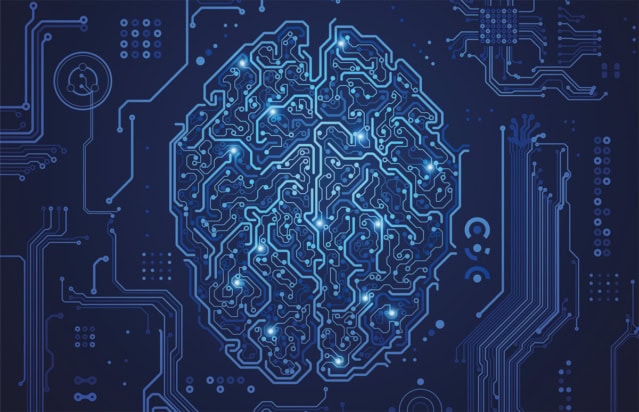
 Read article: Deep connections: why two AI pioneers won the Nobel Prize for Physics
Our podcast guest is Anil Ananthaswamy, author of Why Machines Learn
 Read article: Study finds preschool children form ‘social droplets’ when moving around the classroom
The movement of preschool children results in two distinct phases, find study
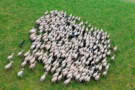 Read article: Field work – the physics of sheep, from phase transitions to collective motion
Physics sheds a new insight on the behaviour of sheep flocks, helping with new tips on shepherding
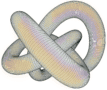 Read article: Spot the knot: using AI to untangle the topology of molecules
Solving a centuries-old mathematical puzzle could hold the key to understanding the function of many of the molecules of life
 Read article: The eyes have it: how to spot the difference between a deepfake portrait and a real picture
How do you spot a deepfake image of a person? The answer might be to look into their eyes.
 Read article: Why North America has a ‘tornado alley’ and South America doesn’t
There’s a scientific reason why Twisters is set in the US Great Plains rather than Argentina, and it has to do with the Gulf of Mexico
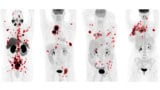 Read article: Deep transfer learning detects six different cancers on PET/CT scans
A generalizable AI tool performs fully automated tumour segmentation on whole-body PET/CT images
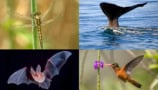 Read article: Simple equation predicts how quickly animals flap their wings
Relationship between mass, wing area and wingbeat frequency holds true for insects, bats, birds, whales and even a flapping robot
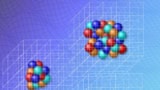 Read article: Nuclear physicists tame radius calculation problem
New "wavefunction matching" method correctly predicts nuclear radii of elements with atomic numbers from 2 to 58
 Read article: Micro-tornadoes help transport nutrients within egg cells
New work sheds light on vortex flows involved in mixing and transporting ooplasmic components that cells need to develop
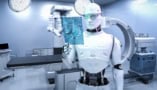 Read article: Will future radiotherapy be delivered entirely by AI bots?
The ESTRO 2024 closing debate saw speakers discuss whether the radiation therapy care pathway will be delivered entirely by bots by 2040
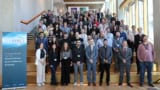 Read article: Data science CDT puts industry collaboration at its heart
The Liverpool Centre for Doctoral Training (CDT) for Innovation in Data Intensive Science is preparing the next generation of physicists for their future careers
 Read article: Artificial intelligence: developing useful tools that scientists can trust
Computer scientist Rick Stevens is our podcast guest
 Read article: Sound and light waves combine to create advanced optical neural networks
Researchers demonstrate a novel computation architecture based on the interaction of optical and acoustic waves
 Read article: In real-world social networks, your enemy’s enemy is indeed your friend, say physicists
New work validates key elements of balance theory put forward nearly 80 years ago
 Read article: Statistical physics provides powerful insights into the living world
The theoretical physicist Tannie Liverpool talks about the mathematics of wound healing, and much more
 Read article: Artificial intelligence will help pick Nobel Prize for Physics winners
Swedish Academy believes AI will reduce bias in evaluating nominations
 Read article: Researchers use machine learning to improve the taste of Belgian beers
The team hops the findings could be used to enhance the flavour of alcohol-free beer